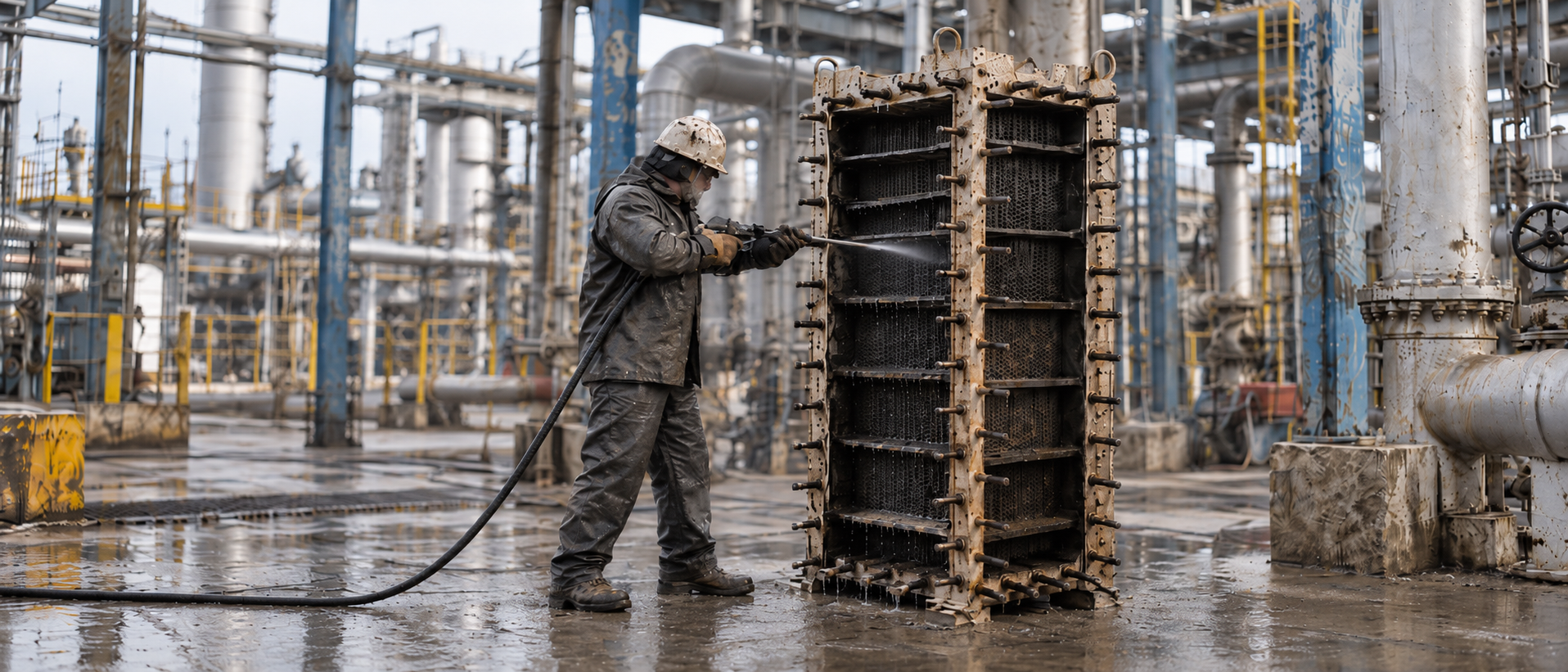
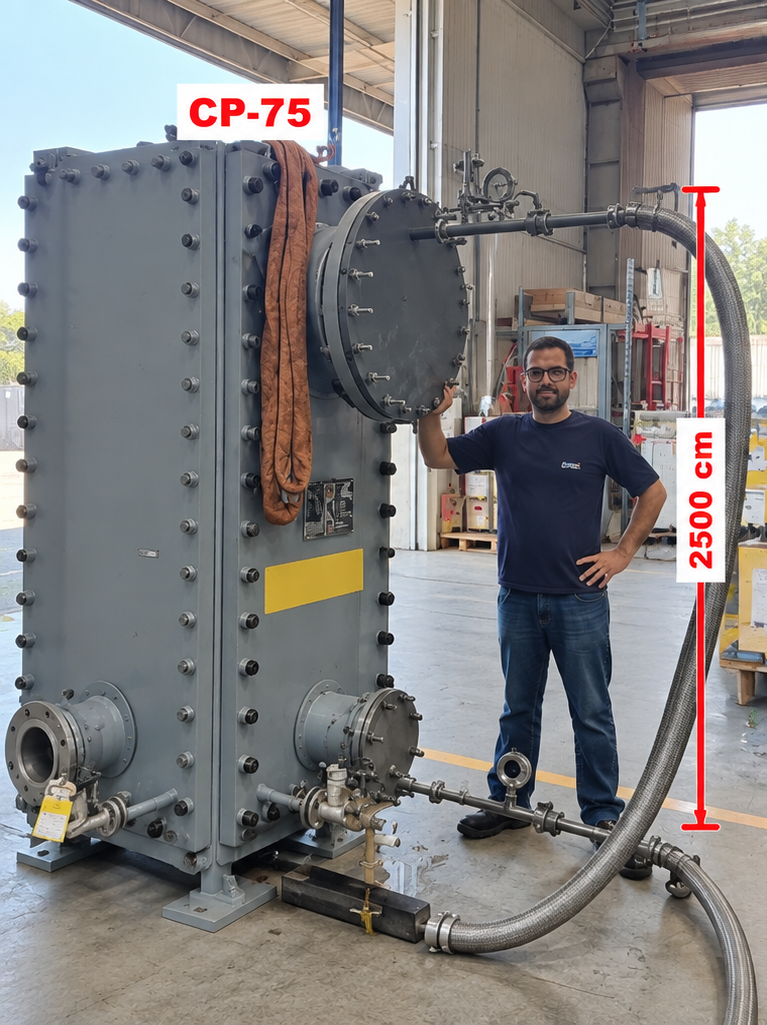
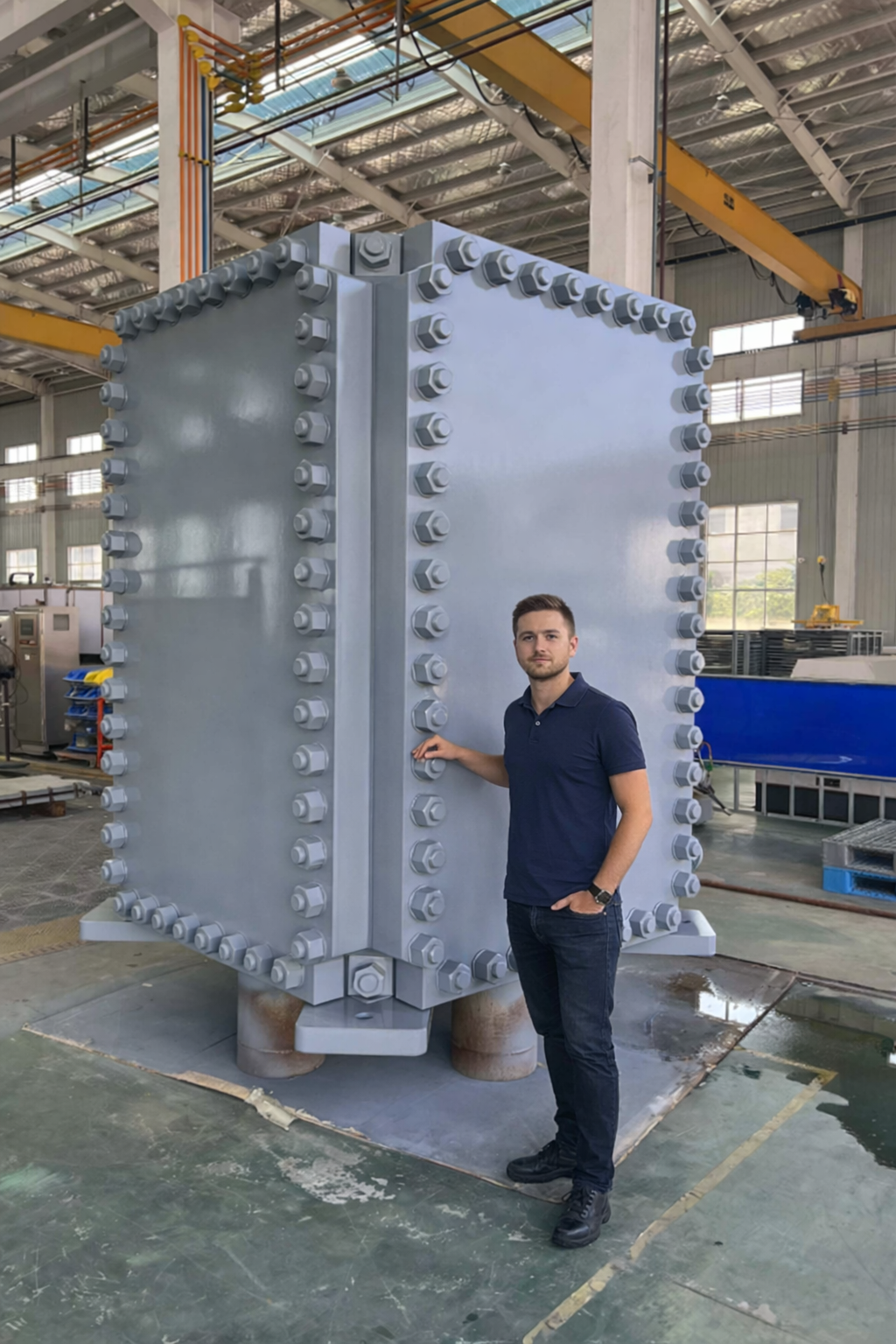
Alfa Laval Compabloc®
Core replacement is evaluated only where the existing geometry and interfaces are technically compatible.
For assessment: model / serial number, nameplate, GA drawing, thermal datasheet and photos.
Explore HEXCBLOC ↗HEXCBLOC provides engineered replacement solutions for existing Compabloc® and K°Bloc® installations. Depending on the existing equipment, we can evaluate complete-unit replacement and, where technically compatible, welded-core replacement.
Each replacement is reviewed against the existing duty, dimensions, connections, materials and mechanical design requirements.

The model family identifies the assessment route; drawings and operating data determine the final proposal.
Core replacement is evaluated only where the existing geometry and interfaces are technically compatible.
For assessment: model / serial number, nameplate, GA drawing, thermal datasheet and photos.
Explore HEXCBLOC ↗Welded-core interchange is not offered for this equipment family.
For assessment: model / serial number, nameplate, GA drawing, thermal datasheet and photos.
Explore HEXCBLOC ↗Complete-unit and core assessments combine process data with mechanical details.
Flow rates, inlet and outlet temperatures, heat load and allowable pressure drop.
Fluid composition, operating and design pressure and temperature, and wetted materials.
Overall dimensions, nozzle positions, flange standards, supports, piping interfaces and service clearances.
Model families provide a starting point. The existing duty, design conditions, drawing and installation define the replacement.
| Existing equipment | HEXCBLOC family | Typical replacement route | Core replacement |
|---|---|---|---|
| Compabloc CP15 ↗ | HEXCBLOC 15 ↗ | Complete unit / core assessment | Subject to drawing and configuration review |
| Compabloc CP20 ↗ | HEXCBLOC 20 ↗ | Complete unit / core assessment | Subject to drawing and configuration review |
| K°Bloc BT20 | HEXCBLOC 20 ↗ | Complete-unit assessment | Not offered |
| Compabloc CP30 ↗ | HEXCBLOC 30 ↗ | Complete unit / core assessment | Subject to drawing and configuration review |
| K°Bloc BT30 | HEXCBLOC 30 ↗ | Complete-unit assessment | Not offered |
| Compabloc CP40 ↗ | HEXCBLOC 40 ↗ | Complete unit / core assessment | Subject to drawing and configuration review |
| K°Bloc BT40 | HEXCBLOC 40 ↗ | Complete-unit assessment | Not offered |
| Compabloc CP50 ↗ | HEXCBLOC 50 ↗ | Complete unit / core assessment | Subject to drawing and configuration review |
| K°Bloc BT50 | HEXCBLOC 50 ↗ | Complete-unit assessment | Not offered |
| Compabloc CP75 ↗ | HEXCBLOC 75 ↗ | Complete unit / core assessment | Subject to drawing and configuration review |
| K°Bloc BT75 | HEXCBLOC 75 ↗ | Complete-unit assessment | Not offered |
| Compabloc CP120 ↗ | HEXCBLOC 120 ↗ | Complete unit / core assessment | Subject to drawing and configuration review |
| K°Bloc BT120 | HEXCBLOC 120 ↗ | Complete-unit assessment | Not offered |
Model size alone does not confirm interchangeability. Final selection is based on thermal duty, design pressure and temperature, materials, nozzle arrangement, dimensions and installation constraints.
Kelvion · Welded Plate Heat Exchangers · 05/25
Vertical configuration reference. CP75 is listed at 3,300 mm maximum height in the cited Alfa Laval leaflet; HEXCBLOC 75 is listed at 3,600 mm in our range. Matching family numbers or dimensions do not establish identical plate geometry, nozzle positions or thermal performance.
The cited Alfa Laval leaflet gives ASME design maxima of 30 bar for CP15–40, 38 bar for CP50–75 and 42 bar for CP120, with −46 to 343 °C. Our published HEXCBLOC range lists FV–32 bar and −40 to 300 °C. Confirm the required design conditions for each proposal.

Alfa Laval spare-block references below help identify the existing core. Send its pattern, plate count, material and drawing for a HEXCBLOC core assessment.
| Original model | Alfa Laval plate pattern | Published plate counts |
|---|---|---|
| Compabloc CP15 ↗ | CP | 30 / 50 / 70 / 90 |
| Compabloc CP20 ↗ | CP | 40 / 60 / 80 / 100 |
| Compabloc CP30 ↗ | CPL | 60 / 80 / 100 / 130 / 160 |
| Compabloc CP40 ↗ | CPK | 120 / 160 / 200 |
| Compabloc CP50 ↗ | CPX | 150 / 200 / 250 / 300 |
| Compabloc CP75 ↗ | CPX | 150–500 |
| Compabloc CP120 ↗ | CPX | 200–500 |
Check plate width and length, corrugation, channel gap and welded edge profile against the existing core.
Confirm core envelope, panel seal faces, bolt locations and baffle arrangement. A complete spare block may include the frame as well as the welded plates.
Alfa Laval reference: complete unit or welded-core replacement. GEA / Kelvion reference: complete unit only; no core interchange. Confirm the selected configuration before manufacture.
Replacement engineering also considers plate-edge construction, channel geometry, cleanability and access for maintenance. Learn about welded plate construction
A defined engineering process turns the existing unit data into a project-specific replacement proposal.
Model, nameplate, drawings and operating data.
Thermal duty, pressure drop, materials and mechanical design.
Overall dimensions, nozzle positions, supports and piping interface.
Selection sheet, GA drawing, scope, price and lead time.
Customer names and operating details are withheld.

Existing welded block heat exchanger assessment and core replacement review.

Mechanical fit, connections and operating requirements reviewed for a complete replacement unit.
Send us the model, nameplate, GA drawing and operating conditions. We will review the thermal duty, dimensions, connections and replacement options.

Explore two petrochemical replacement project records and four engineering guides for demanding process duties.
A project record for replacement of the core in an existing Alfa Laval CP75 unit, with the confirmed scope and limits of the available project information.
Read project recordPROJECT RECORD · PETROCHEMICALPetrochemical project record for a complete welded block heat exchanger replacement, distinguishing confirmed scope from unpublished technical results.
Read project recordAPPLICATION ENGINEERING GUIDECondenser selection guide covering vapour composition, operating pressure, non-condensable gases, pressure drop, subcooling and condensate drainage.
Read selection guideAPPLICATION ENGINEERING GUIDEReboiler and evaporator selection guide: boiling pressure, vapour generation, circulation, static head, pressure drop and heating-medium conditions.
Read selection guideAPPLICATION ENGINEERING GUIDEMaterial-selection guide for corrosive process fluids: composition, contaminants, concentration, temperature, plate alloys and panel seals.
Read selection guideAPPLICATION ENGINEERING GUIDEWelded block heat recovery selection guide for refinery and petrochemical streams, with fouling, thermal balance, pressure drop and retrofit interfaces.
Read selection guideReview plate-pack and complete-unit scope, CP model references, nozzle arrangements, materials and retrofit requirements.
Compabloc replacement engineeringProvide both fluids, flow rates, inlet and outlet temperatures, operating and design pressures, allowable pressure drop and material requirements. For a replacement, include the nameplate and arrangement drawing.