
01Liquid–Liquid Heat Transfer
Exchange heat between two liquid streams. Match the temperature programme and flow rates while checking viscosity, fouling and allowable pressure drop on both sides.
PANSTAR welded block heat exchangers serve chemical, petrochemical, refining and energy processes through condensation, evaporation, heating, cooling and heat recovery. Selection depends on the process duty, fluids, phase change, temperatures, pressures, fouling, corrosion and material compatibility, allowable pressure drop and maintenance access.
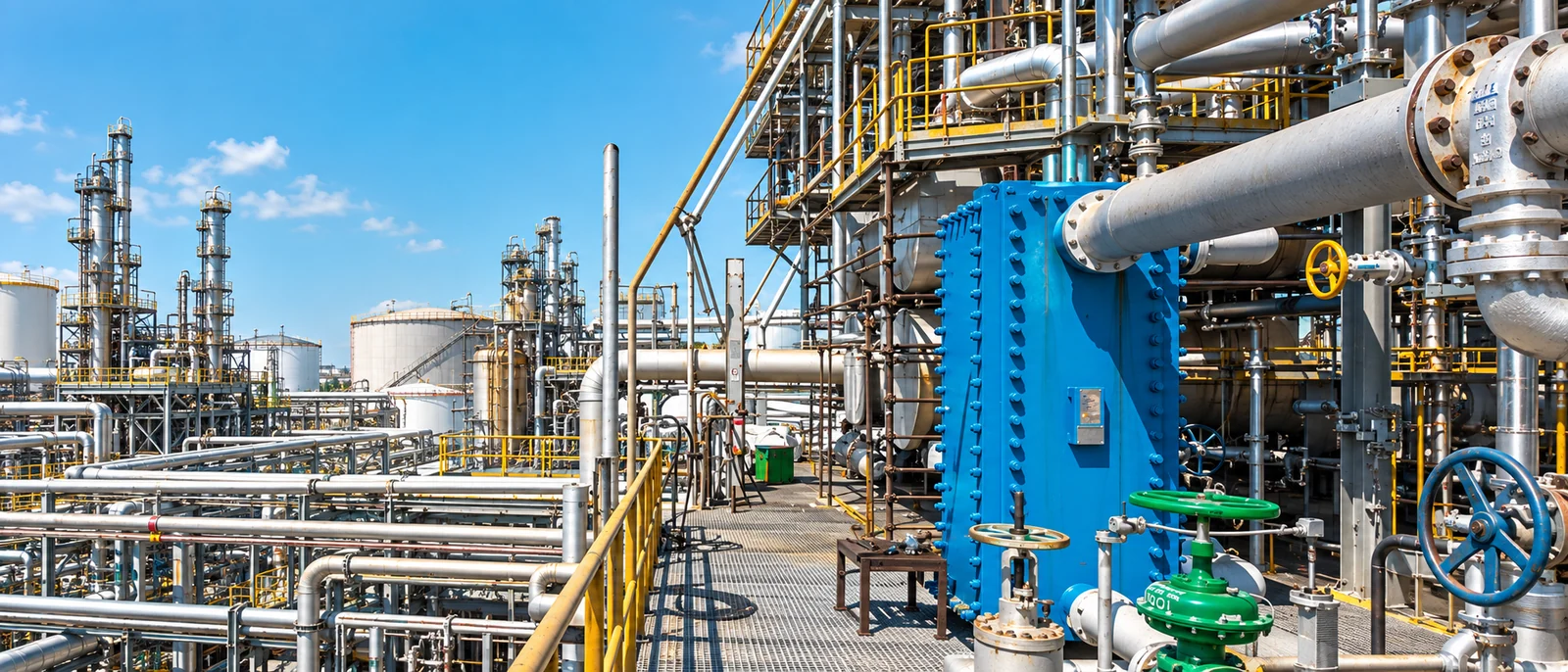
Explore flow arrangements for liquid–liquid heat transfer, condensation and reboiling, including one-pass and multi-pass configurations.
Exchange heat between two liquid streams. Match the temperature programme and flow rates while checking viscosity, fouling and allowable pressure drop on both sides.
Condense process vapour, recover solvents or condense steam. Review non-condensable gases, condensate drainage and pressure drop, then confirm the operating pressure and channel arrangement for the duty.
Supply heat to boil process fluid in evaporator or reboiler service. Confirm boiling pressure, vapour generation and circulation; thermosiphon service depends on available driving head and system pressure losses.
Transfer useful heat from a hot process stream to a colder stream, such as feed preheating. Match available heat with demand and review temperature approach, fouling and pressure drop.
Heat a process liquid using hot water, steam condensate or another process stream. Define the target outlet temperature and the available heating-medium conditions across the operating range.
Cool process liquids using water, brine or another process stream. Check coolant availability, outlet-temperature requirements, material compatibility and fouling on both sides.
Materials, flow arrangement, design pressure and temperature are confirmed for each project.
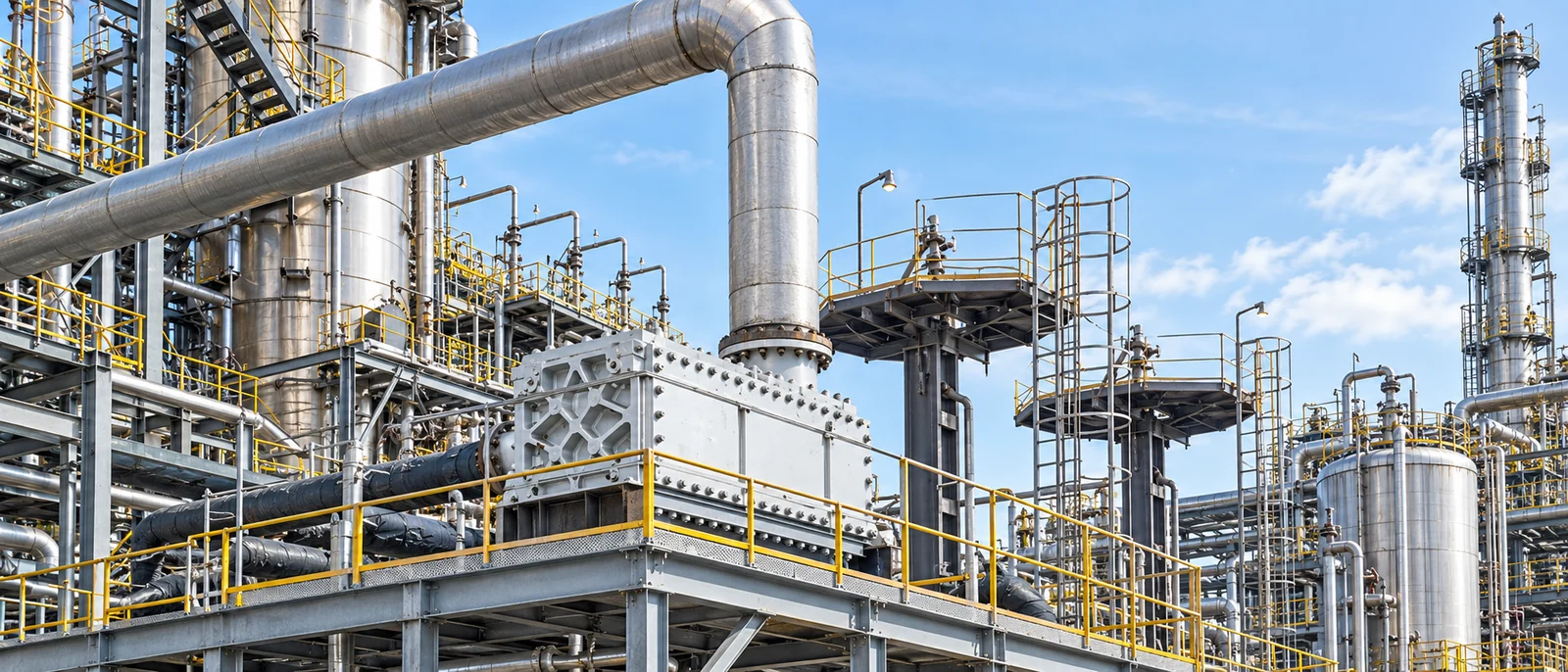
Feed preheating, process heating and cooling, condensation, reboiling and heat recovery can require compact installation space and service access. Review elevated-temperature duties against design conditions, fouling and maintenance clearances.
Refinery and petrochemical heat-recovery selectionCondensation, evaporation and heat recovery may involve corrosive process fluids. Select the plate alloy and panel seals for composition, concentration and temperature; review fouling and cleaning access rather than assuming universal compatibility.
Chemical process heat-exchanger selectionProcess-liquid and gas-treatment circuits may require heat recovery with limited installation space. Check fluid contaminants, material compatibility, pressure drop and access to the welded channels.
Lean/rich amine selection considerationsAssess low-pressure feedwater heating using extraction steam. Review condensation, part-load operation, condensate drainage and installation constraints.
Explore feedwater heatingSolvent condensation and recovery require review of vacuum pressure drop, drainage, fluid compatibility and cleaning. Assess the exact design against the process and product-contact requirements.
Explore solvent condensationAssess foul condensate preheating and bleach plant heat recovery with attention to corrosion, fibre carryover, deposits and cleaning access.
Explore pulp mill heat recoveryRecover heat from hot deodorized oil to preheat incoming feed. Review oil viscosity, temperature approach, pressure drop and product-contact requirements for edible oil refining.
Explore edible oil heat recoveryProcess-water heating and cooling, steam-condensate duties and heat recovery can benefit from a compact welded plate pack. Confirm water quality, panel seals and service clearances for the actual utility circuit.
Steam-condensation selection guidanceDefine both stream compositions, operating and design temperatures and pressures, phase-change conditions and allowable pressure drops. Review fouling, solids, corrosion and the space needed to remove covers and use cleaning equipment.
Material selection is application-specific: assess available stainless steels, titanium or other confirmed alloy options against the fluids, contaminants and cleaning chemicals. Service access can support inspection and mechanical cleaning where deposits and channel geometry permit.
Welded Block Heat Exchanger Replacement SolutionsReview duty-specific selection guides and two existing petrochemical replacement records. The records state the confirmed supply scope; they do not establish general application performance.
A project record for replacement of the core in an existing Alfa Laval CP75 unit, with the confirmed scope and limits of the available project information.
View CP75 plate pack replacement in petrochemical servicePROJECT RECORD · PETROCHEMICALPetrochemical project record for a complete welded block heat exchanger replacement, distinguishing confirmed scope from unpublished technical results.
View Complete welded block exchanger replacementAPPLICATION ENGINEERING GUIDECondenser selection guide covering vapour composition, operating pressure, non-condensable gases, pressure drop, subcooling and condensate drainage.
View Welded block heat exchangers for condenser dutyAPPLICATION ENGINEERING GUIDEReboiler and evaporator selection guide: boiling pressure, vapour generation, circulation, static head, pressure drop and heating-medium conditions.
View Welded block heat exchangers for reboiler dutyAPPLICATION ENGINEERING GUIDEMaterial-selection guide for corrosive process fluids: composition, contaminants, concentration, temperature, plate alloys and panel seals.
View Welded block heat exchangers for corrosive serviceAPPLICATION ENGINEERING GUIDEWelded block heat recovery selection guide for refinery and petrochemical streams, with fouling, thermal balance, pressure drop and retrofit interfaces.
View Refinery and petrochemical heat recoverySend hot- and cold-side fluid data, flow rates, inlet and outlet temperatures, operating and design conditions, and allowable pressure drops. Include phase change, fouling, material requirements and maintenance constraints for thermal selection.
Datasheets and process specifications can be submitted for engineering review.
Each guide identifies the process data, material review and installation checks needed for selection.
Assess a welded block exchanger for sulfuric acid cooling using acid concentration, impurities, temperatures, materials, pressure drop and cleaning requirements.
Review Sulfuric Acid Cooler SelectionGAS TREATING & PROCESS HEAT RECOVERYEngineering assessment for lean/rich amine heat recovery: solvent composition, acid-gas loading, heat balance, pressure drop, fouling and material selection.
Review Lean / Rich Amine Heat Exchanger SelectionCONDENSATION & INDUSTRIAL UTILITIESSelect a welded block steam condenser using steam pressure, mass flow, non-condensable gases, condensate temperature, cooling conditions and pressure drop.
Review Steam Condenser Heat Exchanger SelectionREFINERY & PETROCHEMICAL APPLICATIONSRefinery exchanger selection for heat recovery, cooling, condensation and reboiling. Assess process streams, fouling, pressure drop and retrofit interfaces.
Review Welded Block Heat Exchangers for RefineriesCHEMICAL PROCESS ENGINEERINGChemical-process heat exchanger selection for heating, cooling, condensation and evaporation, including fluid compatibility, materials and cleaning access.
Review Welded Block Heat Exchangers for Chemical ProcessesINDUSTRIAL ENERGY RECOVERYAssess recoverable process heat using hot- and cold-stream data, approach temperature, operating schedules, pressure drop and a measured energy baseline.
Review Waste Heat Recovery with Welded Block ExchangersProvide both fluids, flow rates, inlet and outlet temperatures, operating and design pressures, allowable pressure drop and material requirements. For a replacement, include the nameplate and arrangement drawing.