
Process Role
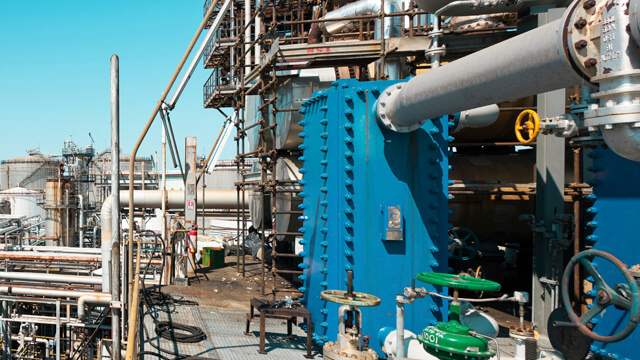
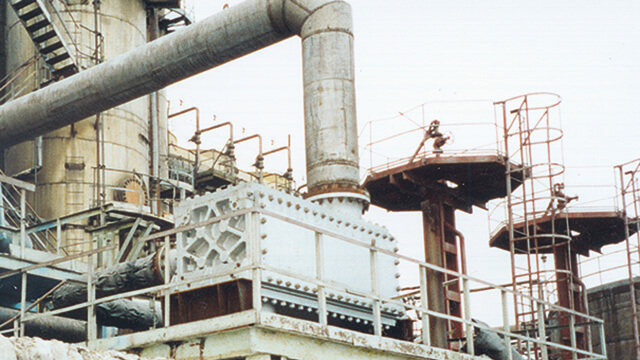
Welded block exchangers can perform different thermal duties around refinery distillation and associated process units. The published references describe overhead condensation, crude feed preheating, plant hot-water recovery and refrigeration condensation. These duties have different fluids and hydraulic constraints; a model number alone does not establish a suitable configuration.
Typical Thermal Duties
CDU overhead condensation and crude oil preheating
A crude distillation unit overhead condenser removes heat from the overhead vapour. Where the receiving crude stream provides a suitable heat sink, the same exchange can condense vapour while preheating the crude feed. A published reference reports this pairing; its numerical reference duty is presented on the refinery heat-recovery page.
Overhead cooling and plant hot water
Another published refinery reference describes recovery of overhead heat in place of second-stage air cooling. The useful heat goes to crude preheating and plant hot water. The source does not assign every exchanger to an individual sink, so the process should not be reconstructed as a detailed equipment schedule.
Alkylation refrigeration condensation
A supplementary source places welded block equipment in an alkylation refrigeration circuit. This supports a refrigeration-condensation application, but does not identify the refrigerant, condensation pressure or operating temperatures. Those values must come from the actual process specification.
Sour Water Stripping: Feed and Bottoms Duties
The source shows sour-water feed exchanging heat with stripped water before entering the SWS column. Live steam enters the column; acid gas leaves overhead. Stripped bottoms give up heat in the feed/effluent exchanger and then pass through a downstream cooler.
The heat-recovery exchanger and final stripped-water cooler are separate duties. Identify which circuit is being selected and provide its own thermal and hydraulic requirements.
Key Engineering Inputs
For each exchanger, provide both fluid compositions, phase conditions, mass flows, inlet and target outlet temperatures, heat load and the allowed pressure drop on each side. Give normal, startup and limiting cases. Identify the cooling or heat-recovery medium and its seasonal availability.
List operating pressure separately from design pressure and temperature. Include contaminants, deposit history, corrosion evidence, required materials and any existing arrangement drawing.
Design Challenges
A refinery overhead duty needs review of condensation behaviour, drainage and pressure-drop allowance. Crude service needs a fouling and cleaning basis; material selection needs the actual corrosive environment. The C276 material in one published reference is not a universal refinery alloy recommendation.
For a retrofit, assess nozzle locations, piping interfaces, supports, lifting and the available installation envelope. Include room to remove covers and inspect the plate pack. A compact exchanger still requires maintenance clearance.
What PANSTAR Needs for Selection
Identify the process unit and the specific duty first. Send the thermal datasheet, stream properties, allowable pressure drops, separate operating/design conditions, material basis and site constraints. For existing equipment, add the nameplate, general arrangement and inspection history. An engineering proposal should define the selected configuration and installation interfaces.
Engineering background: Refinery and SWS process background, pp. 40–41; Published refinery heat-recovery description, pp. 26–29. The examples describe published third-party equipment, not PANSTAR installations.